Shell Dwellers
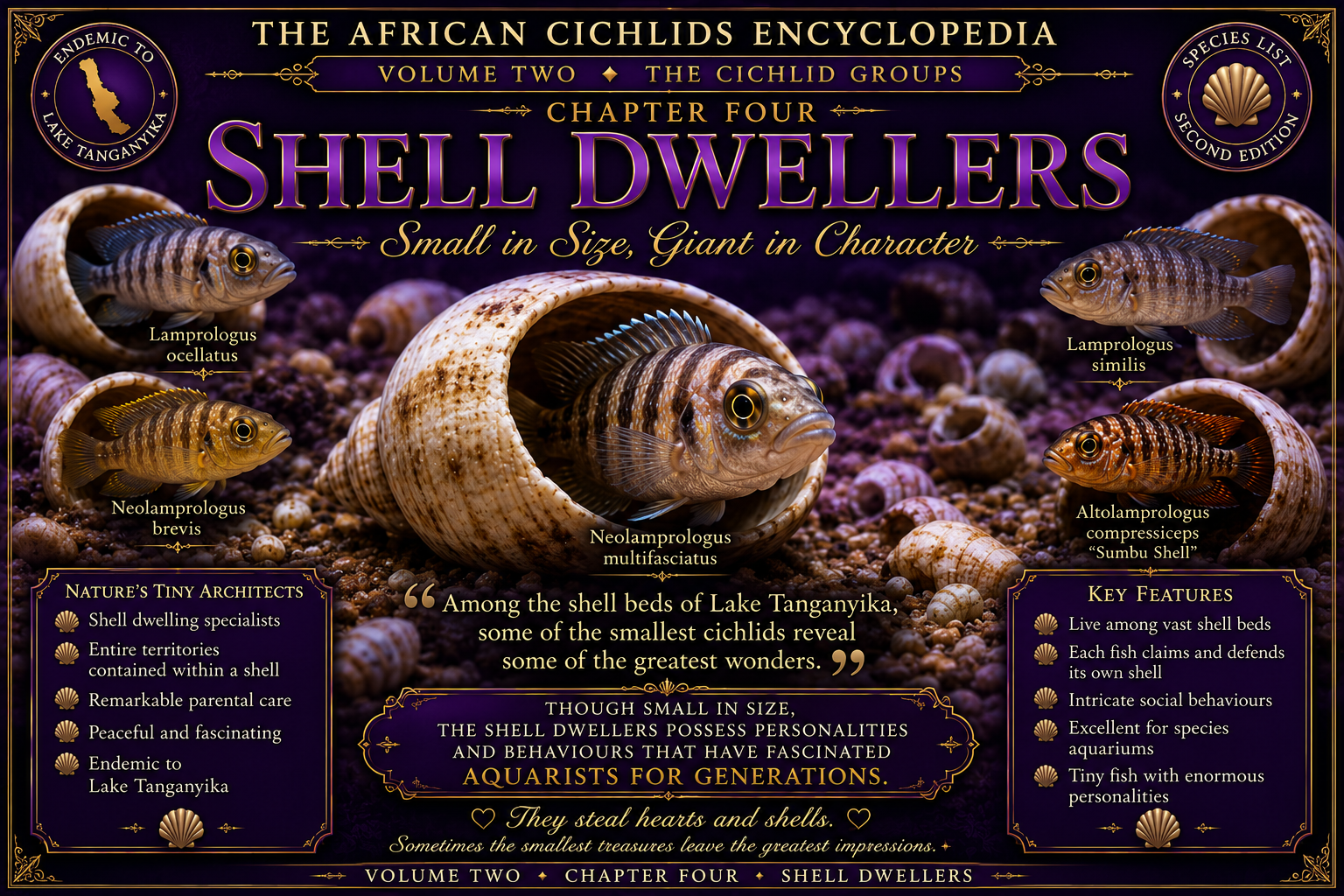
Shell Dwellers: The Miniature Engineers of Tanganyika
Shell-dwelling cichlids (strictly known as Ostracophilous or "shell-loving" cichlids) are an evolutionary marvel completely unique to Lake Tanganyika. In the wide, barren, sandy deserts of the lake, there are no rocks to hide in. To survive, these tiny fish have adapted to make the empty shells of the native freshwater snail, Neothauma Tanganicense, their permanent homes, breeding forts, and defensive bunkers.
What Makes a Cichlid a "Shelly"?
Despite their tiny dwarf size, Shellies display some of the most complex architectural and social behaviours in the animal kingdom.
- Massive Landscaping Projects: Shellies don't just sit in a shell; they are obsessed with earthmoving. A single fish will grab mouthfuls of sand, swimming backward, to dig a deep crater around its shell. Some species bury their shells completely under the sand until only the tiny circular opening is visible to outsiders.
- Fierce Pint-Sized Aggression: Do not let their size fool you. Shellies are fiercely brave. An alpha male Multifasciatus measuring only 4 cm will happily attack a human hand, a siphon tube, or a fish ten times its size if they get too close to its shell perimeter.
- Complex Colony Hierarchies: They live in highly organized family structures. A single aquarium can hold an entire multi-generational colony, where older siblings will actively help the parents protect and raise the newest tiny fry.
Setting Up Your New Shelly Tank (Expert Tips)
Since you are planning a tank right now, here are the absolute mandatory rules for a thriving Shell Dweller setup:
Fine Sand is Non-Negotiable: You must use a soft, fine substrate like pool filter sand or fine aragonite sand. Because they sift and move tons of sand every day, rough gravel will scratch their mouths and permanently stop them from exhibiting their famous digging behaviors.
Over-Provide Shells: The golden rule is to provide at least two to three shells per fish. Escargot (apple snail) shells are the absolute favorite substitute in the home aquarium and are easy to buy online. If there aren't enough shells, the colony will slide into intense turf wars.
High Carbonate Hardness (KH): Coming from Tanganyika, these fish require exceptionally hard, alkaline water. Using a substrate like crushed coral sand or adding marine buffers helps keep your pH locked high (8.6–9.0), keeping them healthy and inducing constant breeding.
Popular Lake Tanganyika Shell Dweller Species
Multifasciatus (Neolamprologus multifasciatus)
The smallest cichlid in the world. Displays neat vertical brown bars. Perfect for beginners because they form massive, peaceful multi-generational family colonies across a shared bed of shells.
Similis Cichlid (Neolamprologus similis)
Very similar to the Multi, but carries a slightly different, bolder striping pattern that stretches right up onto their heads and nose. Fantastic, high-energy diggers with beautiful blue-tinted eyes.
Gold Ocellatus (Lamprologus ocellatus "Gold")
Boasts a gorgeous solid, metallic-gold body with small iridescent purple patches on their gills. Unlike Multis, they are highly aggressive pair-bonding fish that require wide personal territory zones.
Dwarf Compressiceps (Altolamprologus compressiceps "Shell")
A truly fascinating miniature version of the giant Altolamprologus. Features an incredibly flat body shape, zebra bars, and thousands of tiny glittering pearlescent spots. A slow-moving ambush predator.