Tanganyikan Cichlids
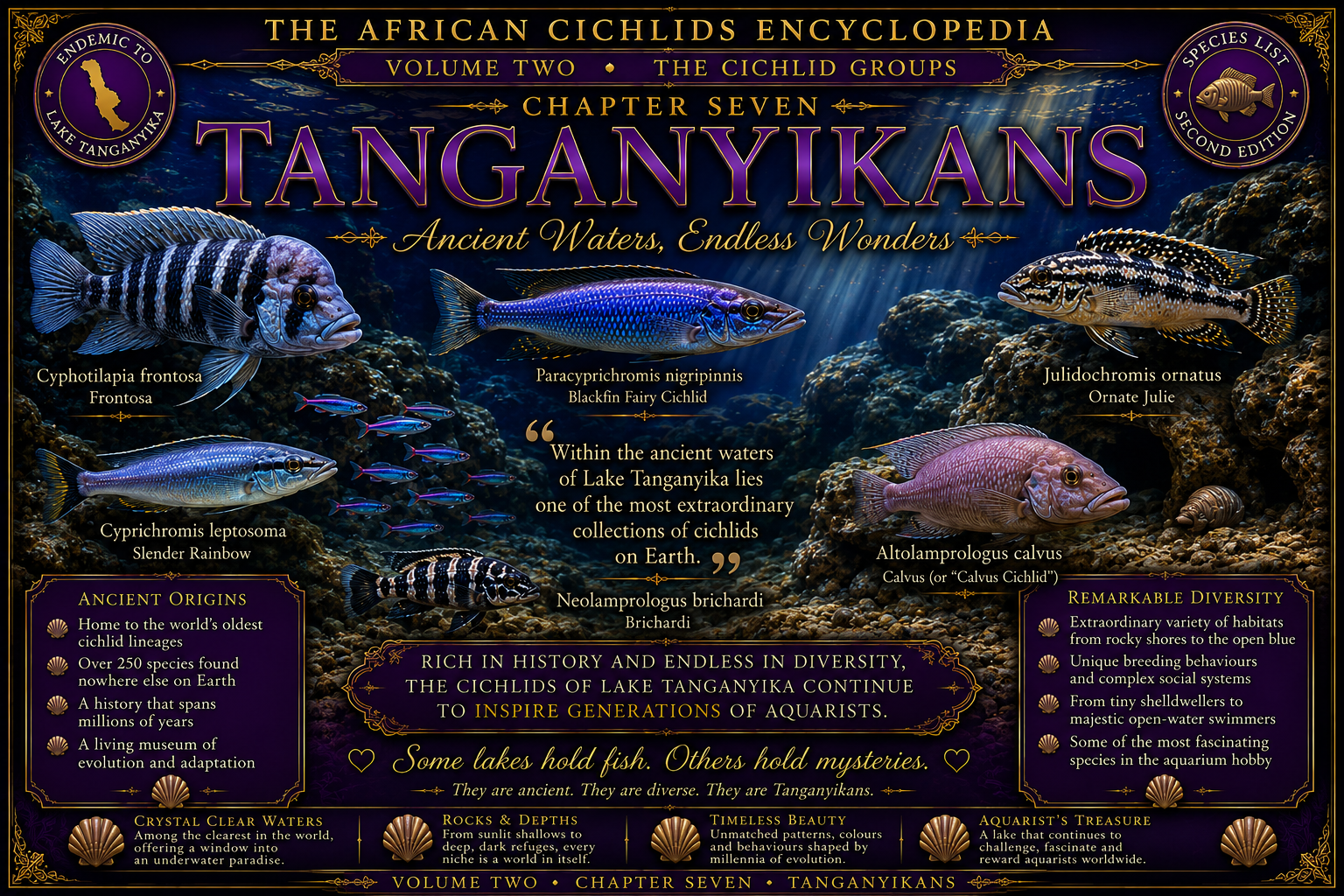
The Tanganyikans
The Tanganyikan cichlid family (excluding the highly specialized Tropheus and Shell Dwellers we already covered) is widely considered the most structurally diverse, ancient, and highly evolved group of fish in the entire Rift Valley.
While Lake Malawi cichlids mostly share a similar shape, Tanganyikans have spent 9 to 12 million years evolving hyper-specialized physical traits. This long isolation resulted in a collection of unique fish profiles, ranging from sleek, vertical cave-dwellers to massive, deep-water giants.
What Makes a Cichlid a "Tanganyikan"?
Aside from their ancient lineage, these fish are celebrated for their highly advanced, diverse reproductive habits and specialized lifestyles:
- Extreme Shape Variations: Unlike other lake cichlids, Tanganyikans do not share a uniform look. They have evolved radically different body types—including paper-thin compressed profiles built to slip into microscopic rock cracks, and torpedo shapes built for long-distance open water racing.
- Substrate & Cave Spawning: While Lake Malawi is dominated almost exclusively by mouthbrooders, many Tanganyikan groups are substrate spawners. They bond in tight, dedicated pairs, laying adhesive eggs deep inside dark rock caves or crevices, fiercely defending their territory together for months.
- Complex Family Castes: Certain species exhibit advanced social behaviours where older generations of offspring remain with the parents, acting as a security force to guard and protect the newest batches of fry.
Keeping Tanganyikans: Essential Guidelines
Because these fish are highly specialized, setting up a general Tanganyikan community aquarium requires careful planning:
- Intricate Rockwork and Caves: For cave-dwelling species, you must stack rocks safely all the way to the top of the glass. Creating distinct, separate rock piles is crucial so different pairs can claim an isolated cave system without crossing into rival territories.
- High Minerals and Stability: Tanganyikan water is incredibly hard and alkaline. Using a marine-based substrate like aragonite or crushed coral sand is highly recommended to naturally buffer the pH up to its native target of 8.6 – 9.0. [1]
- Precise Dietary Match: Because this group includes both strict carnivores (predators) and specialized micro-predators, you cannot feed them a single generic food. You must match the diet to the species—offering high-protein foods like mysis and krill to the carnivores, while keeping them separated from any herbivorous tankmates.
Iconic Lake Tanganyika Cichlid Species
Frontosa Cichlid (Cyphotilapia frontosa)
The undisputed monarch of the lake. Features bold black and white vertical bands, powder-blue fins, and a massive, majestic cranial bump on the foreheads of mature alpha males.
Black Calvus (Altolamprologus calvus)
Features an incredibly narrow, laterally compressed body covered in thousands of glittering pearlescent white spots. Built to slide sideways into narrow rock fissures to hunt or escape predators.
Cylindricus (Neolamprologus cylindricus)
An elegant, elongated cichlid decorated with bold, chocolate-brown and white vertical bands. They live deep within rock piles, swimming upside down or sideways along cave roofs.
Lemon Cichlid (Neolamprologus leleupi)
Famous for providing a huge pop of color in a Tanganyikan tank. Boasts a solid, vibrant, neon-lemon yellow body. They are cave spawners that form fiercely defensive mated pairs.