Aquascaping
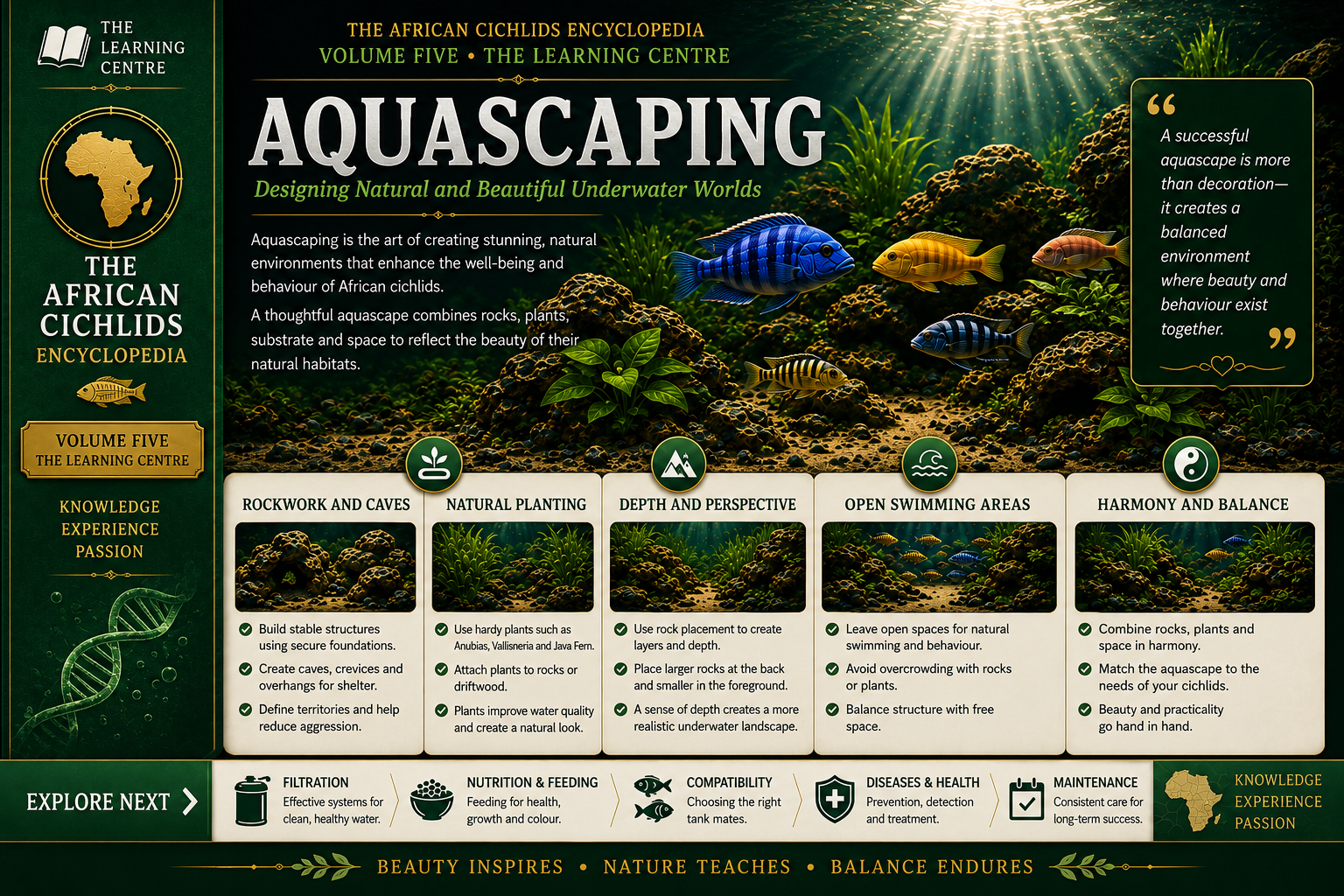
Aquascaping: Replicating the Rift Valley Reefs
Aquascaping a Malawi cichlid tank is a unique challenge that combines artistic design with structural safety. In the wild, these fish live among massive, wave-battered underwater rock reefs. Replicating this rugged terrain isn't just about making the aquarium look beautiful—it is a biological requirement to manage territorial aggression, provide escape routes for subdominant fish, and encourage natural grazing behaviours.
The Golden Rule of Cichlid Hardscaping: Always place your base rocks directly on the bottom glass or on a protective grid mat before adding your substrate. Malawi cichlids are relentless diggers; if you stack heavy rocks on top of loose sand, they will eventually dig underneath them and trigger a catastrophic glass-shattering collapse.
The Three Pillars of a Safe Malawi Aquascape
To build a successful hardscape that protects both your fish and your aquarium glass, keep these three structural pillars in mind:
- 1. Rock Type and Consistency: Stick to one type of stone throughout the entire tank to create a natural, cohesive look. Excellent choices include Ocean Rock, Lava Rock, Texas Hole Stone, or weathered river boulders. Smooth or porous rocks with natural caves are ideal. Avoid stones with sharp, jagged edges that could scrape or injure your fish during high-speed territorial chases.
- 2. Building to the Waterline: Do not just lay a few rocks flat along the sand. Build your rock piles all the way up into the middle and upper thirds of the water column. This vertical structure is crucial because it allows subdominant fish or holding females to break the line of sight of aggressive, territory-owning males at the bottom of the tank.
- 3. Creating Endless Tunnels: Ensure your structures aren't just solid walls. Build complex, interlocking caves with distinct entrances and exits. A cave with only one opening can become a deadly trap if a dominant male corners a rival inside. Tunnels allow chased fish to dart in one side and safely escape out the other.
Frequently Asked Aquascaping Questions (From the Logbooks)
Q: Sand or Gravel: Which is the best substrate for Malawi cichlids?
A: Fine silica sand or aragonite sand is vastly superior to gravel. Malawi cichlids love to scoop up mouthfuls of substrate, sift it through their gills to find food particles, and spit it back out to dig vast breeding pits. Coarse gravel can scratch their mouths and gills, leading to infections, and it allows waste to trap easily between the pebbles.
Q: Can I use real wood or driftwood in a Malawi tank?
A: It is highly recommended to avoid driftwood in a African cichlid setup. Natural wood releases tannins into the water, which slowly lowers the pH and softens the water quality. Malawi cichlids require a very hard, alkaline environment (pH 7.8–8.6). Adding wood actively works against your water chemistry goals.
Q: How do I protect my bottom glass from heavy rock piles?
A: Before adding anything to the tank, lay down a sheet of standard plastic eggcrate (light diffuser grid) or a thin layer of aquarium-safe hobby foam directly on the bottom glass. This grid distributes the point-pressure weight of heavy limestone or ocean rocks evenly across the entire glass panel and prevents accidental cracks if a rock slips during maintenance.
Q: Should I glue my rock structures together?
A: For tall, vertical structures, using aquarium-safe silicone or specialised underwater epoxy to bond key rocks together adds a massive layer of security. However, make sure you can still lift out sections if you ever need to net a sick fish or retrieve a holding female, as catching a fast cichlid in a fully glued reef is nearly impossible without tearing down the entire tank.