Diseases & Health
25 Years of Experience: Preventing and Treating Malawi Illnesses
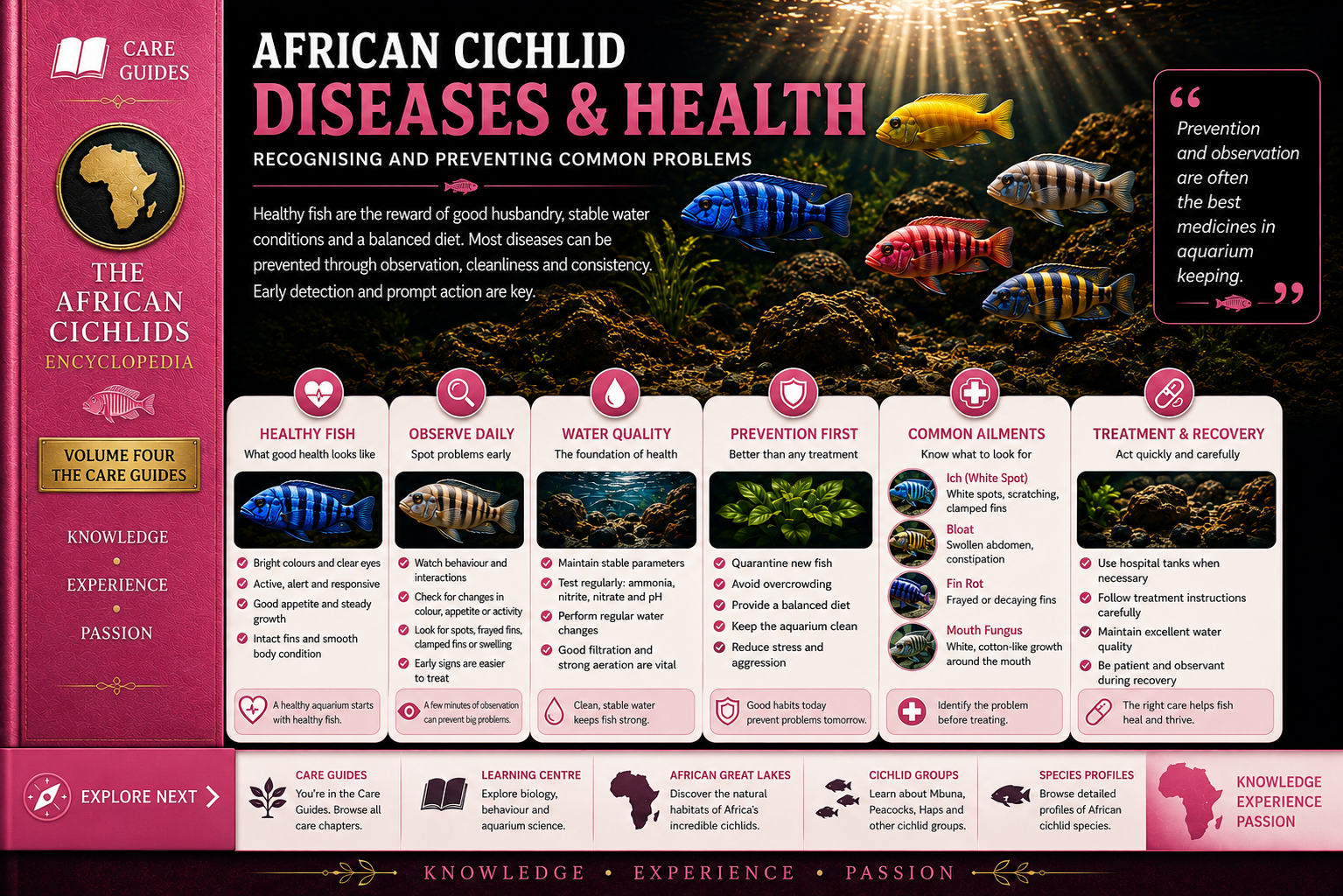
Maintaining a thriving Lake Malawi cichlid aquarium requires a proactive approach to fish health. In my twenty-five years of keeping these remarkable fish, I have learned that almost every common cichlid disease is completely preventable. Because Malawi cichlids are exceptionally hardy, a disease outbreak is rarely an isolated accident—it is almost always an indicator of environmental stress, poor water quality, or incorrect husbandry.
"In a quarter-century of fishkeeping, the most valuable lesson I can pass on is that water quality is your primary medicine. Before you reach for expensive medications that destroy your biological filter, check your parameters. A massive water change and fixing environmental stressors will cure more fish than chemicals ever can."
Malawi Bloat: The Silent Killer
Malawi Bloat is the most notorious and devastating illness affecting African cichlids, particularly herbivorous Mbuna. It is a complex condition primarily caused by an overgrowth of naturally occurring intestinal parasites (flagellates), which proliferate when the fish's digestive tract becomes irritated or compromised.
- The Primary Causes: The number one trigger is dietary indiscretion—specifically, feeding high-protein, low-fibre foods (like bloodworms or mammalian proteins) to strict vegetarians. Secondary causes include chronic stress from overcrowding, poor water quality (high nitrates), or relentless bullying.
- Early Symptoms to Watch For: Loss of appetite is always the first warning sign. Healthy Malawi cichlids are ravenous; if a fish ignores food, something is wrong. You may also notice lethargy, rapid breathing, and white, stringy faeces.
- Advanced Symptoms: Swelling of the abdomen (dropsy) and clamped fins. By the time physical bloating occurs, internal organ damage is severe, and the survival rate drops drastically.
- Treatment and Prevention: Immediately isolate the fish if possible, or treat the entire tank with Metronidazole if multiple fish show symptoms. Prevent bloat permanently by feeding a high-quality kelp or spirulina-based flake/pellet and maintaining strict weekly water changes.
Ich (White Spot Disease) and External Parasites
Ichthyophthirius multifiliis, or Ich, is a highly contagious protozoan parasite that manifests as tiny, salt-like white spots across the body and fins of your cichlids. While common in the hobby, it can spread rapidly through a high-energy Malawi community if left unchecked.
- Environmental Triggers: Ich is almost always triggered by a sudden drop in water temperature (such as a malfunctioning heater or adding cold water during a water change) or severe stress from shipping and introduction.
- Behavioral Symptoms: Before the white spots become fully visible, infected cichlids will begin "flashing"—scratching and scraping their bodies against the rocks and substrate to alleviate the irritation. They may also clamp their fins and hover near the filter outputs.
- The Heat and Salt Method: Because Lake Malawi cichlids naturally thrive in hard, alkaline water with high dissolved solids, they tolerate salt treatments incredibly well. Gradually raising the tank temperature to 28–29°C (82–84°F) speeds up the parasite's life cycle, while adding aquarium salt (1 to 3 tablespoons per 20 litres) safely kills the free-swimming trophonts without crashing your biological filter.
Fin Rot and Physical Injuries
Due to the hyper-aggressive nature of Mbuna and the intense territorial battles of Haps, physical injuries are a regular occurrence in a Malawi setup. If your stocking ratios are correct, these injuries should be minor, but poor water quality can turn a simple scrape into a life-threatening infection.
- Identification: Fin rot appears as frayed, ragged, or disintegrating fin edges, often bordered by a milky white or red, inflamed margin. It occurs when opportunistic bacteria invade a wound caused by fighting or netting.
- The Stress Coat Solution: Healthy Malawi cichlids possess robust immune systems and incredible regenerative capabilities. Minor fin damage or missing scales do not require harsh antibiotics.
- Management: Ensure your water parameters are pristine (zero ammonia/nitrite, nitrates under 20ppm). Performing an extra 50% water change and adding a quality water conditioner that promotes a healthy slime coat is usually all that is required for fins to completely regrow within a couple of weeks. If an injury is severe, isolate the fish in a hospital tank to prevent tankmates from relentlessly targeting the weakened individual.
Malawi Health Diagnostic Checklist
Use this quick reference guide to assess your fish at the first sign of abnormal behavior. Checking these symptoms early can save your tank.
- [ ] Appetite Check: Is the fish ignoring food during feeding frenzy?
→ Potential Indicator: Early-stage Malawi Bloat or severe bullying stress. - [ ] Substrate Scratching: Is the fish "flashing" or scraping its body against rocks/sand?
→ Potential Indicator: External parasites (Ich) or high ammonia irritation. - [ ] Fecal Inspection: Are there long, trailing, white or translucent stringy feces?
→ Potential Indicator: Internal flagellate infection (Bloat) or internal worms. - [ ] Posture & Fin Position: Are the fins tightly clamped against the body while the fish shivers or hovers?
→ Potential Indicator: Advanced stress, bacterial infection, or sudden temperature drop. - [ ] Physical Surface Damage: Are there torn fins, missing scales, or white fuzzy patches on the body?
→ Potential Indicator: Territory battles requiring a water change or secondary fungal infection.