Malawi Bloat
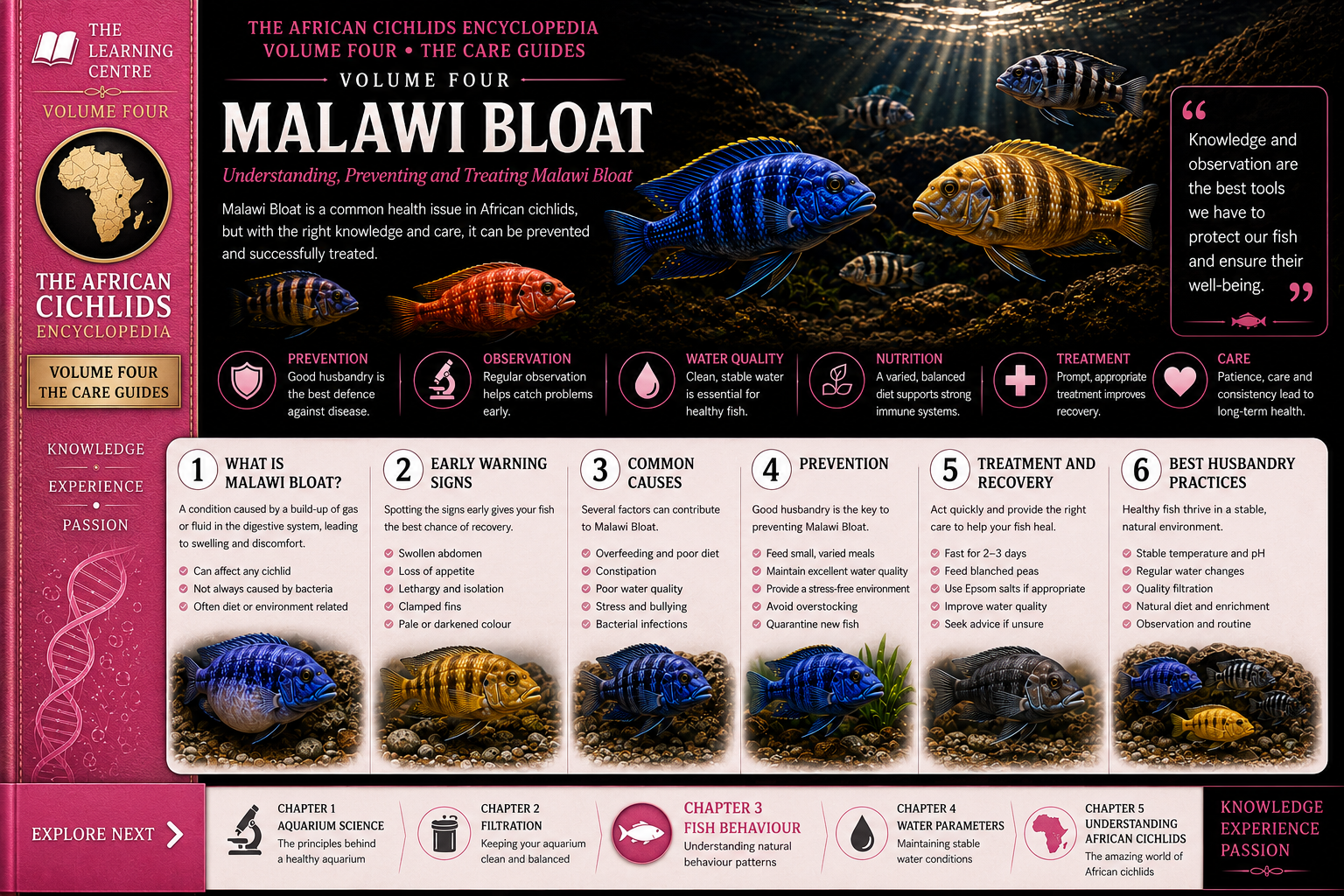
The Science of Malawi Bloat: Pathogens, Triggers, and Physiology
Malawi Bloat is arguably the most feared condition in the African cichlid hobby, capable of wiping out entire colonies of prized fish in a matter of days. While our Care Guide covers the immediate medical treatment steps, truly mastering this disease requires a deep dive into the underlying science of how it functions. Over my twenty-five years of experience, I have learned that bloat is not a simple catch-all infection; it is a complex, multi-stage gastrointestinal collapse triggered by environmental stress and evolutionary dietary conflicts.
"In the Learning Centre, we look at the 'why' behind the disease. Malawi Bloat is almost never caused by an invading, external pathogen. The microscopic protozoans responsible for bloat are already living harmlessly inside your fish's digestive tract right now. Understanding what triggers them to turn deadly is the ultimate key to permanent prevention."
1. The Internal Pathology: From Symbiosis to Sickness
To understand bloat, we must first look at the unique anatomy of Lake Malawi cichlids, particularly the rock-dwelling Mbuna:
- The Evolutionary Digestive Track: In the wild, Mbuna feed primarily on "aufwuchs" (algae matrices scraped from rocks). Because plant material is incredibly difficult to break down, Mbuna have evolved exceptionally long, winding intestinal tracts to maximize nutrient absorption.
- The Resident Microorganisms: Inside these long intestines lives a natural, symbiotic population of flagellate protozoans and opportunistic bacteria. Under normal, healthy conditions, the fish’s robust immune system keeps these micro-organisms in check, and they cause absolutely no harm.
- The Breakdown Cascade: When a cichlid experiences chronic stress or eats an incorrect diet, its intestinal lining becomes irritated and inflamed. This irritation causes the gut to stall (stasis). With the digestive system paralyzed, the resident flagellates rapidly multiply out of control, feeding on the stagnant food matter and causing a massive, systemic internal infection.
2. The Three Ultimate Triggers of Gut Stasis
Because the pathogens are ready and present internally, bloat is purely a trigger-based condition. My 25 years of tracking outbreaks have proven that three specific triggers cause the gut to stall:
3. Why the Physical "Bloat" Happens
Understanding why a fish physically swells up explains why early detection is so critical. The physical bloating is actually the final stage of gastrointestinal failure:
Bloat Prevention Science Checklist
Apply these scientifically backed preventative parameters to ensure your tank environment never triggers an internal flagellate flare-up.
- [ ] Macro-Algae Diet Focus: Are your primary foods guaranteed to be high-fiber, spirulina, or kelp-based, with crude protein sources coming primarily from aquatic invertebrates rather than terrestrial animals?
→ Scientific Benefit: Ensures smooth, rapid transit times through the exceptionally long Mbuna digestive tract, preventing food stagnation. - [ ] High Osmotic Pressure: Is your Carbonate Hardness (KH) locked firmly above 10 dKH to maintain high osmotic pressure?
→ Scientific Benefit: Reduces metabolic energy expenditure for the fish, preserving their immune system's ability to suppress internal protozoans. - [ ] Aggression Isolation Lanes: Does your tank layout feature plenty of visual sight-breaks to prevent any single fish from experiencing chronic cortisol-inducing stress?
→ Scientific Benefit: Keeps stress hormones low, allowing normal, healthy peristalsis (gut movement) to continue uninterrupted.
- The Dietary Conflict (Protein Overload): This is the most common trigger. Mbuna cannot process heavy, complex proteins or fats (such as bloodworms, tubifex worms, or mammalian proteins found in cheap flakes). When forced to eat these high-protein foods, the long intestine cannot digest them quickly enough. The food begins to decay and ferment inside the fish's gut, triggering immediate inflammation and protozoan bloom.
- Osmotic Stress (Soft/Acidic Water): Malawi cichlids are biologically built to maintain a strict internal mineral balance against the hard, alkaline water of the Rift Valley. If your water chemistry is allowed to drift into soft or acidic parameters, the fish must expend a massive amount of metabolic energy just to stay balanced. This chronic osmotic stress heavily suppresses their immune system, leaving the gut vulnerable to flagellate takeover.
- Psychological Bullying: Relentless chasing by a dominant alpha male puts a subdominant fish into a constant state of "fight-or-flight." This psychological stress actively releases cortisol into the bloodstream, which shuts down normal digestive functions and leaves the fish highly susceptible to bloat, even if their diet is perfect.
- Organ Failure & Dropsy: As the flagellates destroy the intestinal lining, the infection breaches the gut wall and spills into the abdominal cavity. The fish's kidneys and liver begin to fail, losing their ability to regulate fluid balance.
- The Point of No Return: The fish's body rapidly fills with retained fluids, forcing the abdomen to distend and the scales to stick out (resembling a pinecone). Once a cichlid reaches this physical stage of fluid retention, internal organ damage is severe, making recovery exceptionally rare. This is why we must train ourselves to spot the behavioral signs—like ignoring food—long before physical bloating begins.