Homepage
Welcome to Malawi Cichlids
⚠️ Tank Rescaling Underway!
Just like a mature Lake Malawi aquarium, a veteran cichlid archive needs a complete aquascape reset from time to time. We are currently performing a massive site-wide water change and re-scaffolding our categories.
Our 25-year archive of Care Guides and Learning Centre pages is being actively migrated into a brand-new, colour-coded framework. If you stumble across a broken pipe, a missing rock, or an unfinished profile over the next few days, don't panic—the alpha parameters will be fully restored very soon!
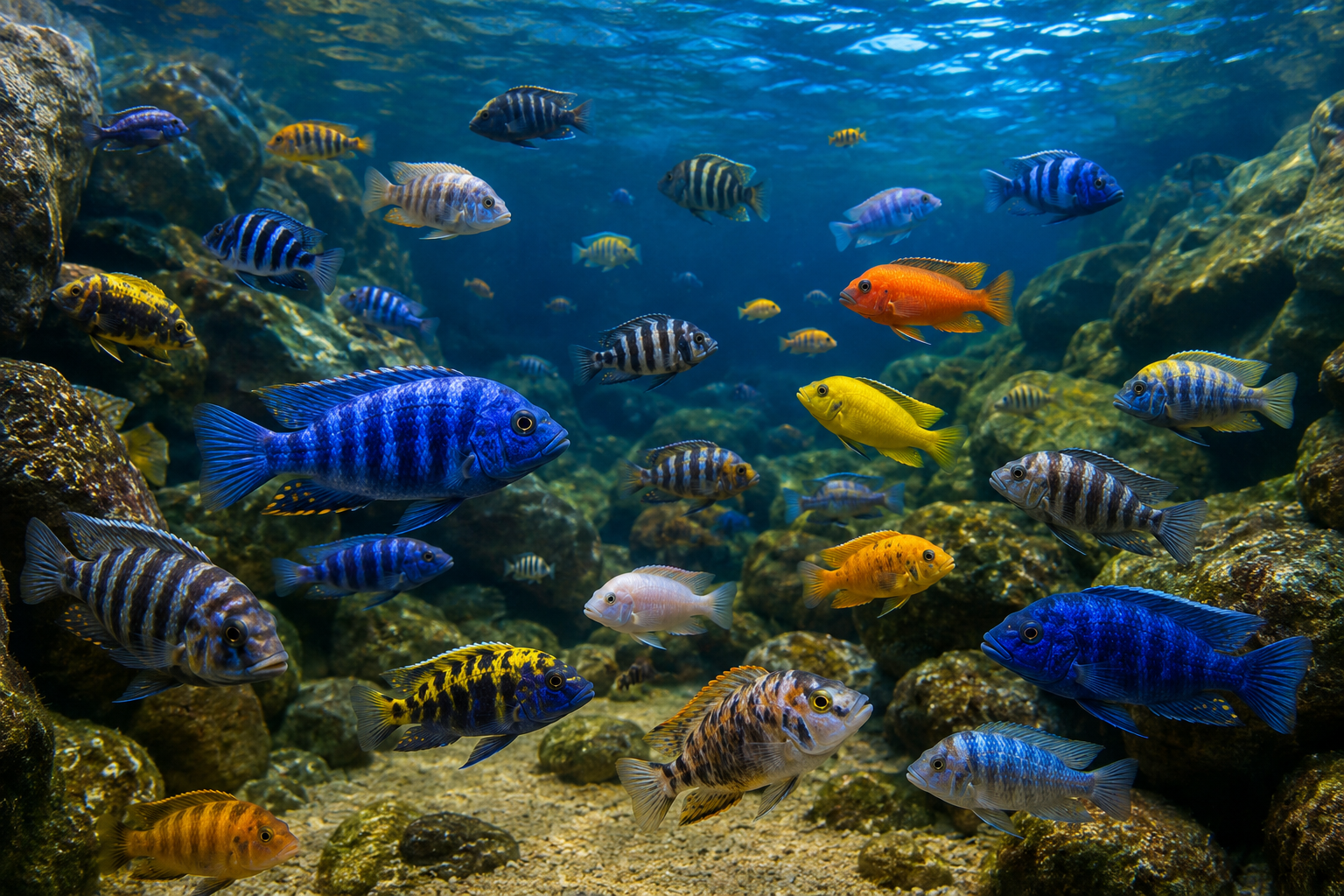
Come on in and make yourself at home! We are thrilled to have you here at www.malawicichlids.co.uk, your dedicated corner of the Rift Valley. Whether you are a seasoned hobbyist or just starting your aquatic journey, dive right in and explore the beautiful, colourful world of African Cichlids with us! Lake Malawi cichlids are a diverse group of freshwater fish native to Lake Malawi, one of Africa's Great Lakes. They are famous for their incredible variety of colours, patterns, and behaviours, with over 700 species believed to exist.
The Wonders of the Rift Valley Lakes
The East African Rift Valley is home to some of the oldest, deepest, and most biologically diverse freshwater lakes on earth. Over millions of years, a small handful of ancestral fish evolved into thousands of distinct species found nowhere else on Earth. This rapid evolution is a biological phenomenon known as adaptive radiation.
1. Lake Malawi: The Jewel of Colour
Lake Malawi is home to over 700 species of cichlids, boasting more fish species than any other lake in the world. They are famous for their vibrant, marine-like metallic colours and energetic personalities.
Most Lake Malawi cichlids fit into three broad hobbyist categories:
- Mbuna: (Rockfish): Highly active, aggressively territorial species that live among underwater rock piles scraping algae.
- Peacocks: (Genus Aulonocara): Striking, peaceful sand-sifters known for their magnificent iridescent blues, reds, and yellows.
- Haps: (Haplochromines): Larger, open-water predators and sleek swimmers with distinct hunting strategies and social structures.
2. Lake Tanganyika: The Cradle of Extreme Diversity
As the longest and second-deepest freshwater lake in the world, Lake Tanganyika is a sanctuary of evolutionary eccentricity. Its cichlids have evolved highly specialized physical traits and bizarre survival habits.
- Shell Dwellers: Tiny, fascinating cichlids (like Lamprologus ocellatus) that make empty snail shells their lifelong homes and breeding fortresses.
- Tropheus: High-energy, tightly-schooled rock grazers that display complex, hierarchical colony behaviour.
- Frontosas: Majestic, deep-water giants with striking vertical stripes and prominent cranial bumps.
3. Lake Victoria: The Modern Survival Story
Though smaller in cichlid diversity due to ecological changes, Lake Victoria contains incredibly unique, fast-evolving haplochromine species:
- Known for intense, deeply saturated neon reds, greens, and true yellows.
- Famous for specialized feeding adaptions, ranging from insect hunters to specialized crab-eaters.
- Highly resilient fish that represent critical conservation efforts within the aquarium hobby.
Unique Behaviours & Aquarium Care
These fish are highly prized in aquariums because of their striking appearance, sharp intelligence, and complex social interactions. To keep them thriving, hobbyists replicate their native ecosystems.
- Water Chemistry: They require hard, alkaline water (pH ranging between 7.8 and 8.6) rich in natural minerals.
- Mouthbrooding Many species exhibit maternal mouthbrooding, a complex survival strategy where females carry eggs and fry safely inside their mouths for weeks.
- Rockwork Layouts: Aquariums are typically structured with intricate caves and rocky territory lines to mimic the natural geological rifts.
In short, African Rift cichlids are among the most colourfully diverse and behaviourally fascinating freshwater fish in the world, making them an endless source of wonder for aquarium enthusiasts.