Synodontis Catfish
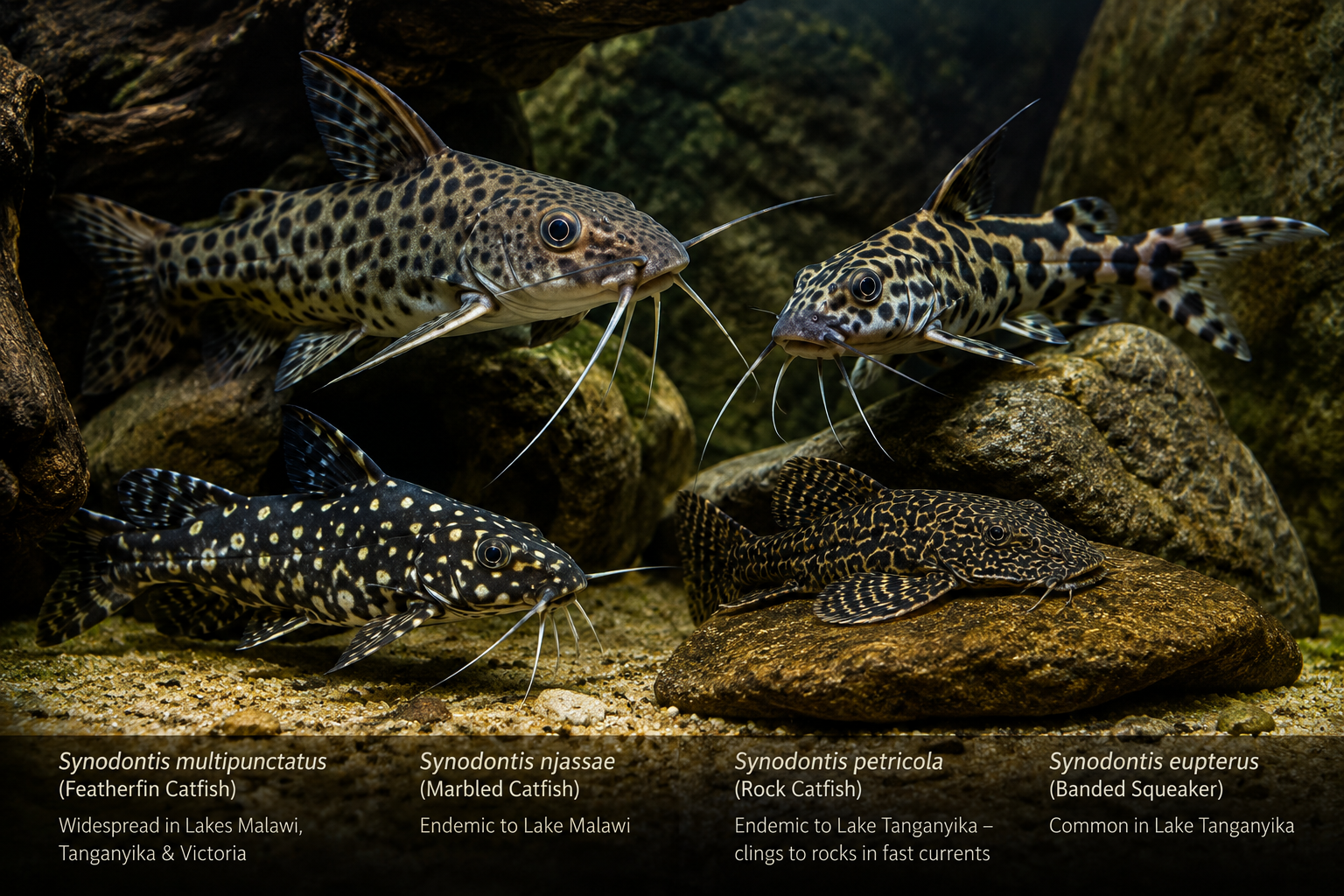
Synodontis Catfish: The Clean-Up Alliance
No African Rift Valley aquarium is truly complete without Synodontis Catfish. Belonging to the family Mochokidae, these fascinating, whiskered bottom-dwellers have evolved right alongside cichlids in the Great Lakes. They are highly prized by hobbyists because they act as a tireless cleanup crew, consuming leftover foods from deep rock crevices while remaining completely unfazed by territorial cichlid tempers.
The Masters of the Tectonic Floors
Synodontis catfish possess a unique biological toolkit that allows them to thrive inside busy, aggressive cichlid environments:
- Bony Armor Protection: Unlike common soft-skinned catfish, Synodontis possess a hard, bony head shield and tough, leather-like skin. When a territorial Mbuna or Hap tries to nip at them, they simply slide away completely unharmed.
- The Famous Upside-Down Swim: Many species are specialized cave dwellers. They will routinely swim completely upside down along the roofs of rock caves to vacuum up hidden food particles, insect larvae, and algae scraps.
- The "Cuckoo" Spawning Heist: Synodontis multipunctatus is famous for committing the ultimate breeding heist. When they spot a pair of mouthbrooding cichlids spawning, the catfish rush in, eat the cichlid eggs, and lay their own eggs in their place. The unsuspecting female cichlid picks up the catfish eggs and broods them inside her mouth, raising the baby catfish as her own!
Keeping Synodontis: Petricola vs. Lucipinnis
If you want to keep a group alongside your upcoming Shell Dweller tank, you need to understand the big update in the hobby regarding Petricola:
25 years ago, every small, white-spotted catfish from Tanganyika was sold under the name Synodontis Petricola. However, scientists have since discovered that the true Petricola is actually a rare, deep-water giant. The small, beautiful catfish we keep in our home aquariums today is officially classified as Synodontis Lucipinnis. They look almost identical, but Lucipinnis stays small and handles shallow home tanks beautifully.
Popular African Synodontis Species
Cuckoo Catfish (Synodontis multipunctatus)
*Taxonomy Update:* Often listed as Grandiops. Famous for its striking leopard spots and its parasitic breeding method where it tricks cichlids into raising its fry.
Dwarf Petricola (Synodontis lucipinnis)
The perfect catfish for a Shell Dweller tank! Stays tiny, features high-contrast white dots on a dark body, and boasts beautiful, bright white edges on all its fins.
Malawi Squeaker (Synodontis njassae)
The only native Synodontis species found in Lake Malawi. Strictly nocturnal, it features thousands of tiny, intricate dark speckles. Earns its name by making audible squeaking sounds when out of water.
Featherfin Catfish (Synodontis eupterus)
Native to the broader river basins. Famous for its magnificent, high-flowing feathered dorsal fin rays. An incredible showpiece fish that handles large Hap and predator setups easily.