Plants
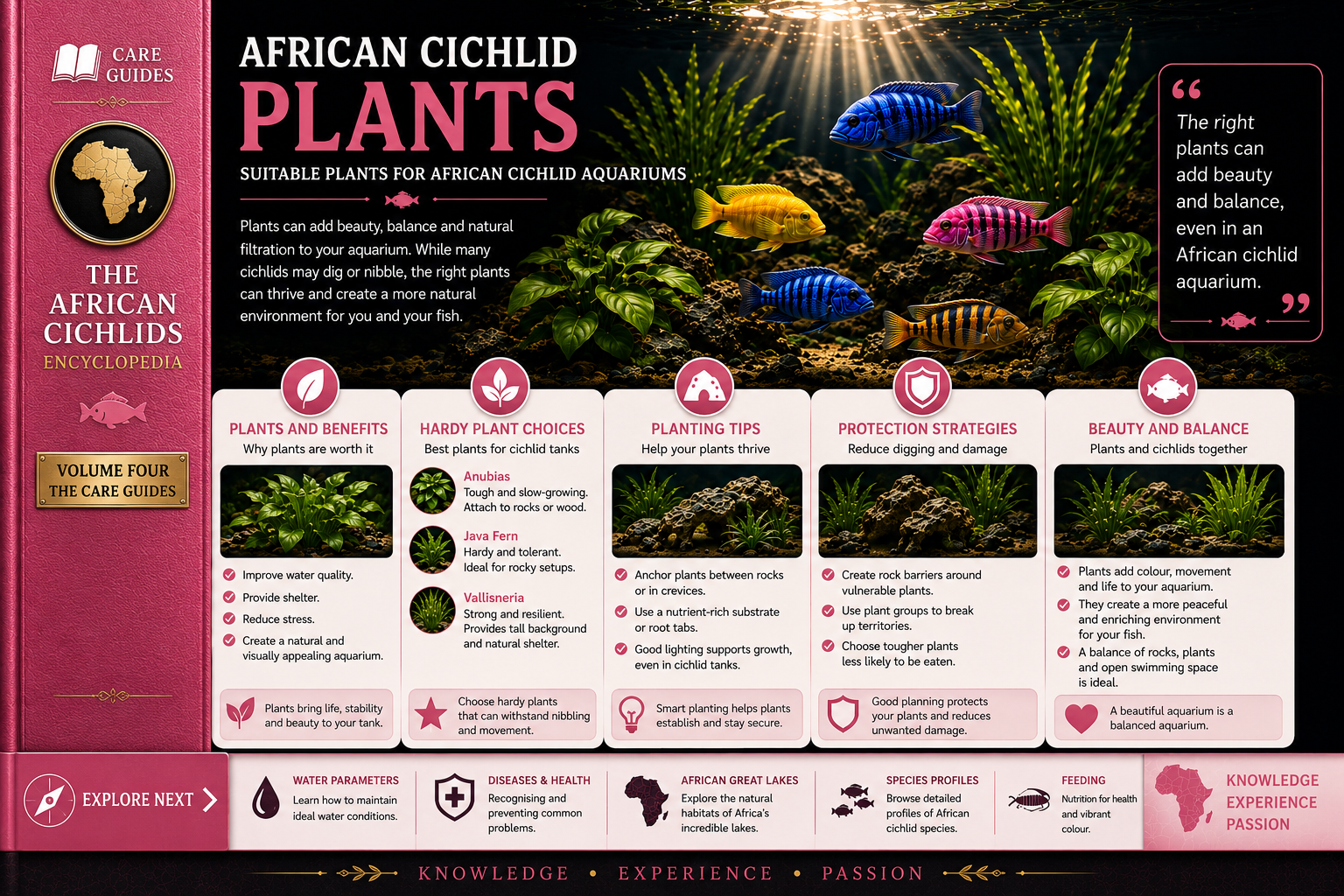
25 Years of Experience: The Secret to a Planted Malawi Tank
If you ask most African cichlid keepers about adding live plants to a Lake Malawi setup, they will tell you it is impossible. Mbuna are relentless herbivores that view most greenery as a salad bar, while both Mbuna and Haps are constant diggers that will quickly uproot anything anchored in the sand. However, in my twenty-five years of maintaining these tanks, I have found that a beautifully green, planted Malawi aquarium is entirely achievable—if you choose the right species and protect their roots.
"The secret to keeping plants with Malawi cichlids isn't changing the fish; it's changing the plants. You must select species with tough, leathery leaves that taste terrible to the fish, and you must never plant them directly into the substrate where digging fish can unearth them."
The Bulletproof Plant Selection
To survive the harsh environment of a Malawi tank, plants must be incredibly hardy and capable of thriving in hard, alkaline water (pH 7.8–8.6). Over the decades, only a select few species have consistently passed my 'Mbuna test':
- Anubias Species (Anubias barteri, Anubias nana): The absolute king of cichlid plants. Anubias features thick, wax-like, leathery leaves that fish simply cannot chew through. More importantly, it tastes incredibly bitter to cichlids, meaning they will usually take one bite and leave it alone forever.
- Java Fern (Microsorum pteropus): Another indestructible option. Like Anubias, Java Fern has a tough structure and a highly unpalatable taste. It thrives in the high-flow environments typical of Malawi filtration systems.
- Vallisneria (Vallisneria americana / Giant Vallis): This is one of the few plants actually native to Lake Malawi. While Mbuna may occasionally nibble the tips, Giant Vallis grows rapidly enough to outpace minor damage. Its long, flowing ribbons look spectacular gently waving in the water column against a backdrop of heavy rockwork.
Securing the Greenery: Planting Techniques
Because Malawi cichlids are natural-born excavators, standard planting methods will fail. If you bury a plant's roots in the sand, it will be floating at the surface by the next morning. You must use specialized anchoring techniques to keep your aquascape intact:
- The Epiphytic Advantage (Superglue & Thread): Both Anubias and Java Fern are epiphytes, meaning they draw nutrients from the water column rather than the soil. Their rhizomes must never be buried, or they will rot. Use a tiny dab of cyanoacrylate-based superglue gel or dark cotton thread to bind the plant directly to your heavy rocks or lava stone. Within a few weeks, the roots will permanently grip the texture of the stone.
- The Rock Fortress Method: If you are planting Vallisneria into the sand, you must build a defensive barrier around the base. Dig a deep hole, place the roots, and then completely encircle and cover the base of the plant with heavy, interlocking cobblestones. This prevents digging fish from reaching the root ball.
- Potted Protections: Another highly successful 25-year trick is leaving plants in their original terracotta pots. Bury the entire pot beneath the sand and camouflage the top rim with small rocks. The fish can dig all they want, but the root system remains completely protected inside the clay pot.
Plant Success Checklist
Before introducing greenery into your Malawi aquarium, ensure your setup meets these essential criteria to prevent plant loss.
- [ ] Rhizome Exposure: Are your Anubias and Java Fern rhizomes fully exposed to the water column and not buried?
→ Result: Prevents root rot and ensures the plant can safely pull nutrients from the water. - [ ] Substrate Shielding: Are all sand-rooted plants heavily barricaded with defensive rocks?
→ Result: Completely stops the excavation habits of nesting males from uprooting your hard work. - [ ] Cichlid Feeding Schedule: Are you feeding your Mbuna plenty of spirulina and vegetable flakes?
→ Result: Satisfies their herbivorous cravings so they are less tempted to test your live plants. - [ ] Algae Management: Do you have adequate lighting timers to prevent hair algae from choking out the slow-growing Anubias leaves?
→ Result: Keeps the slow-growing leaves pristine and clear for optimal photosynthesis.